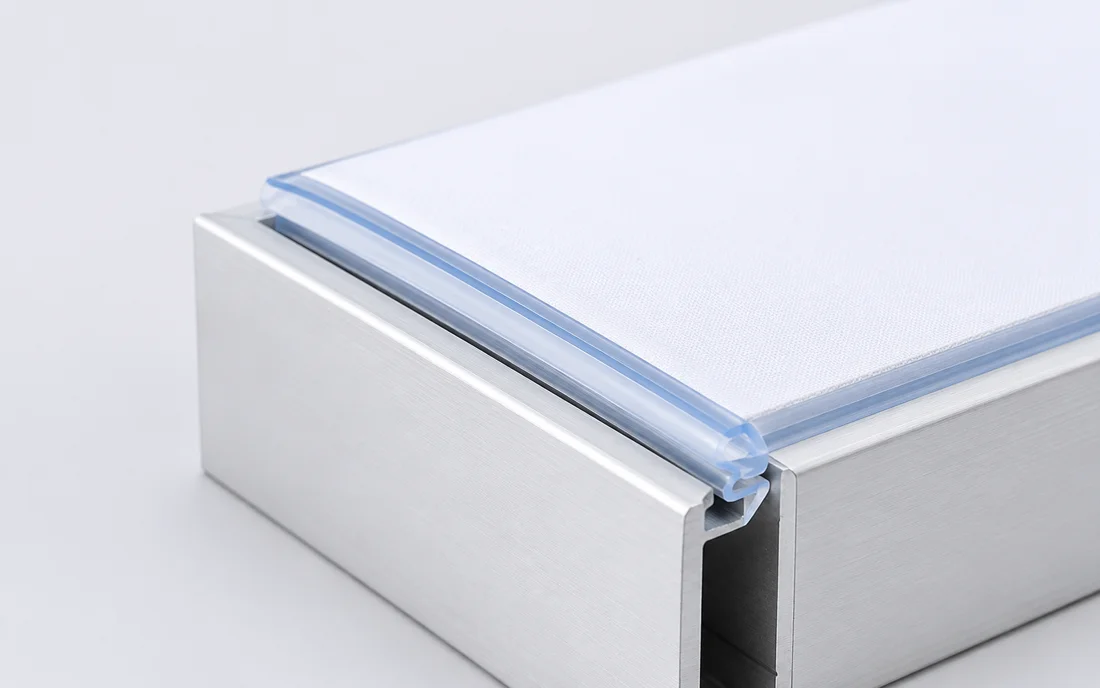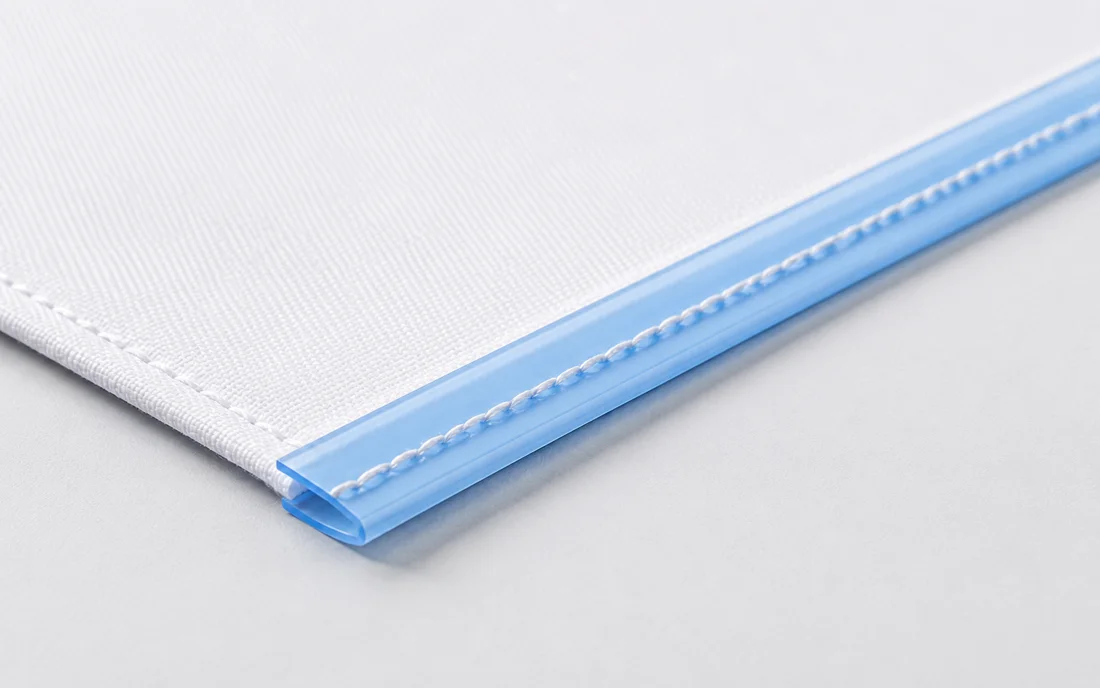
Material Selection
Which Flat Keder should you choose: PVC, TPE or silicone?
Choose a material around your fabric, frame and production process, then qualify the complete assembly.
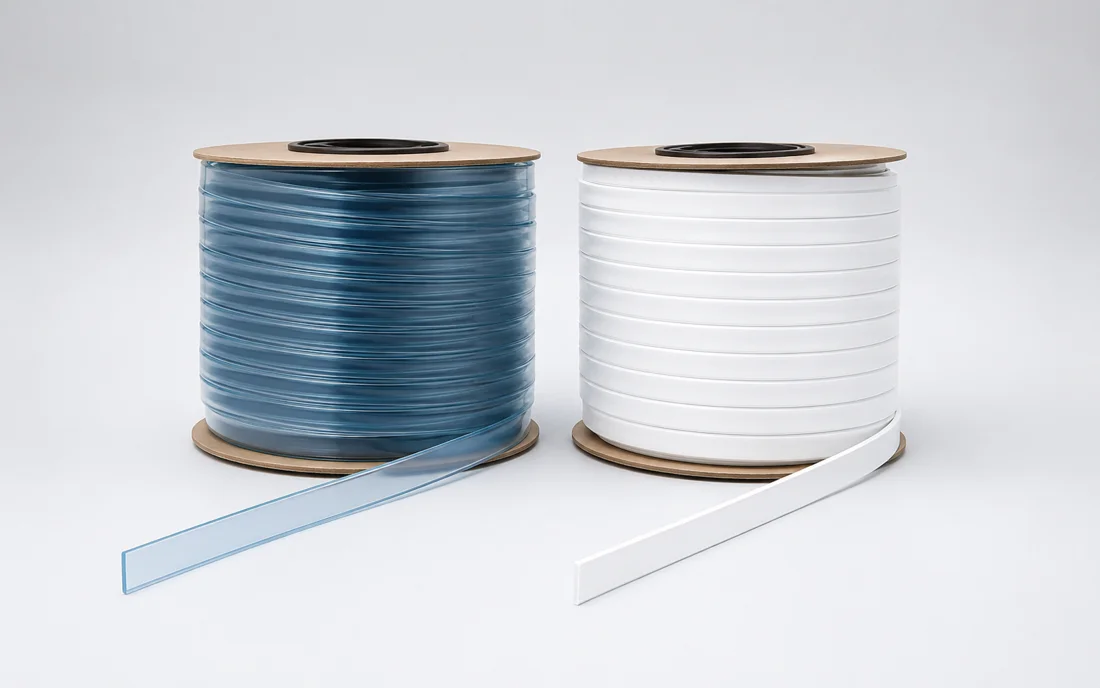
The solution at a glance
Choose the material through a sewn-frame trial, then document the approved specification for repeat orders.
- Identify the frame channel, fabric and sewing process.
- Compare sewn samples under the same installation conditions.
- Record the approved material and dimensions for repeat orders.
What should you check before choosing a material?
Flat keder works as part of an assembly: strip, stitching, fabric and frame channel. A material that feels suitable in the hand may behave differently after sewing or installation. Begin with the display application and the conditions in your production process, then compare samples against the same acceptance criteria.
For this range, the intended application is indoor SEG graphics. Requirements for tents, awnings or structural outdoor textiles need a separate product specification and should not be inferred from indoor display guidance.
- Identify the frame system and channel drawing.
- Record the fabric, print process and sewing method.
- Describe the problem you want a material change to solve.
Does SEG always require silicone edging?
PVC, TPE and silicone are material categories, not complete performance specifications. Formulation, profile geometry and manufacturing conditions can affect the finished strip. Avoid choosing solely from a generic claim about which category is softer, stronger or easier to sew.
SEG stands for silicone edge graphics, but the name is also used for systems with other edging materials. If a customer requires silicone, state that requirement explicitly. A product described only as SEG keder does not establish its composition.
How can you compare materials fairly?
Use the same fabric, machine setup and frame when comparing candidate strips. Record changes rather than relying on memory. If you change the stitch setting or seam allowance to suit one material, note that adjustment so the comparison remains useful.
Evaluate the installed result as well as the sewing operation. Check how the edge enters the channel, how the corners sit and whether the finished graphic has the intended appearance. Keep an approved sample as the reference for later orders.
- Look for stitch damage, twisting or uneven feeding.
- Observe insertion effort without forcing the channel.
- Check the full perimeter, including all four corners.
Which material documents should you request?
When your customer asks for material documentation, identify the exact specification first. A report for one material or formulation should not be assumed to cover every color, profile or product in a range. Ask what the document covers and how it relates to the proposed order.
Share the customer's requested standard or restricted-substance requirement in its original wording. This helps the supplier identify relevant available documentation or explain what additional evaluation may be needed. Do not substitute a general logo or marketing statement for the requested evidence.
What should you include in a sample request?
A useful request includes the current strip dimensions, desired material, channel details and intended fabric. Include a photo or short description of any existing fit or sewing issue. If the current strip works well, an identifiable reference sample can be more useful than an approximate verbal description.
After evaluation, record the approved material, profile, color and packing together. Confirm order quantity and delivery terms separately. BIVO offers free samples with shipping charged separately; the sample selection should reflect the assembly you actually plan to produce.
- Specify material and nominal dimensions.
- Attach the frame drawing or identify an available frame sample.
- State evaluation criteria and any required documentation.
Custom Keder for your application
Tell us your application, dimensions and performance requirements. Contact BIVO to discuss material selection and a custom Keder solution.
Contact us for custom Keder